
How to Build and Manage an Investment Portfolio

Building an investment portfolio is only the beginning. As financial markets change, individual investments grow at different rates, portfolio weights shift, and an investment strategy that once matched your goals may gradually become less suitable.
Learning how to build and manage an investment portfolio means developing a disciplined process for selecting assets, managing concentration, measuring performance, and making adjustments when necessary.
You do not need to predict market movements to manage a portfolio effectively. What matters is understanding what you own, why you own it, how much risk you are taking, and whether your investments remain aligned with your financial objectives.
This guide explains ten practical steps for creating and maintaining a portfolio, with examples of asset allocation, diversification, rebalancing, and performance evaluation.
What Is an Investment Portfolio?
An investment portfolio is a collection of financial assets held by an individual or organization. It may include stocks, bonds, exchange-traded funds (ETFs), mutual funds, cash equivalents, and other investments.
Portfolio management involves overseeing these holdings as a combined financial structure rather than evaluating each asset in isolation. An investment that appears attractive individually may create excessive risk when added to existing positions.
The objective is to establish a portfolio whose overall characteristics match the investor’s goals, time horizon, liquidity needs, and ability to absorb losses.
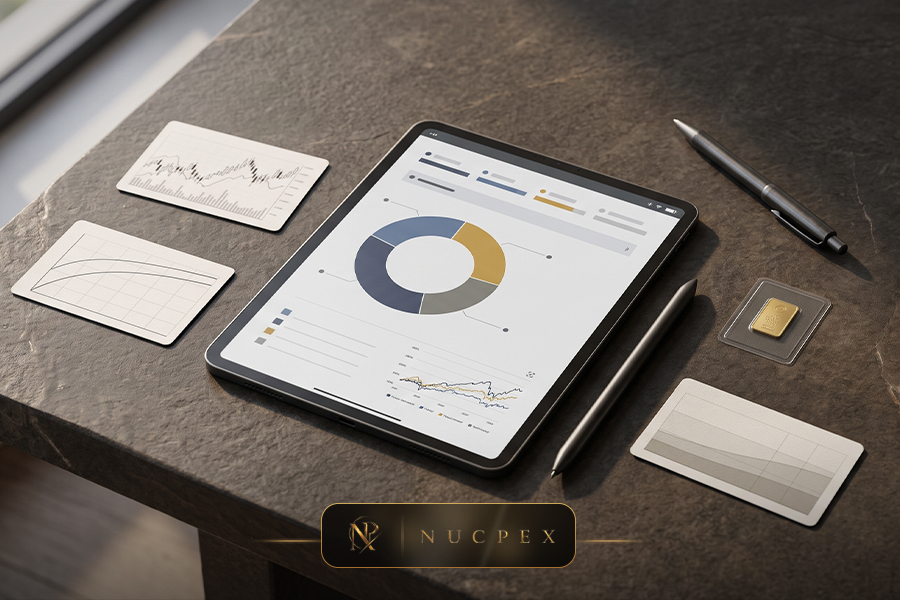
10 Steps to Manage Your Investment Portfolio
Effective portfolio management combines initial construction with ongoing oversight. The following steps move from defining portfolio requirements to implementing a repeatable review process.
1. Define the Portfolio’s Purpose
Start by identifying the financial objective the portfolio should support. Retirement savings, long-term capital growth, income generation, and preserving money for a near-term purchase may require different investment approaches.
Specify the intended investment period and when withdrawals may begin. This helps prevent investments needed for immediate expenses from being exposed to inappropriate market volatility.
2. Establish Your Risk Budget
A risk budget defines the amount of uncertainty and potential loss your financial situation can accommodate. It should reflect both emotional tolerance for volatility and financial capacity to absorb losses.
Consider how a hypothetical 20% portfolio decline would affect your plans. If such a loss would force you to sell assets or compromise essential obligations, the portfolio may be taking more risk than you can reasonably afford.
3. Choose a Target Asset Allocation
Asset allocation determines how your portfolio is divided among categories such as equities, bonds, and cash equivalents. These categories respond differently to changes in economic conditions and interest rates.
There is no universally appropriate allocation. A suitable mix depends on investment goals, time horizon, income needs, and individual circumstances.
4. Diversify Within Asset Classes
Holding multiple asset classes is only one level of diversification. Within equities, investors may also diversify across countries, industries, and company sizes.
Within fixed income, issuer quality, maturity, and currency exposure matter. Diversification can reduce concentration risk, but it cannot eliminate market-wide losses.
5. Select Investments That Fit the Strategy
Once the target allocation is defined, evaluate investment products that can provide the desired exposure. Broad-market funds may offer convenient diversification, while individual securities require more detailed analysis.
Review each product’s underlying holdings, investment mandate, liquidity, fees, and regulatory structure. Avoid choosing assets solely because they recently delivered strong returns.
6. Identify Hidden Portfolio Overlap
Owning several funds does not necessarily mean holding different investments. Two ETFs may track similar indexes and contain many of the same large companies.
Review underlying holdings, sector weights, and geographic exposures. Concentration should be measured across the entire portfolio, not just by counting the number of positions.
7. Control Investment Costs
Portfolio expenses include fund management charges, brokerage commissions, bid-ask spreads, custody fees, and currency conversion costs.
These expenses reduce net investment returns. Compare costs across products with similar investment objectives, while also considering tracking quality, liquidity, and product structure.
8. Create a Contribution and Withdrawal Plan
A portfolio should account for both money entering and leaving the account. Regular contributions can support long-term accumulation, while planned withdrawals require adequate liquidity.
Directing new contributions toward underweighted assets may also help restore portfolio balance without selling existing holdings. However, cash-flow decisions should remain consistent with the investment plan.
9. Monitor Portfolio Performance and Risk
Review performance using a benchmark that reflects the portfolio’s asset mix and investment objectives. Comparing a diversified stock-and-bond portfolio solely with a technology-heavy equity index can produce misleading conclusions.
Monitor changes in allocation, concentration, costs, and liquidity. Distinguish market-driven performance from the effects of additional contributions or withdrawals.
10. Rebalance When Necessary
Rebalancing restores portfolio weights toward their intended targets after market movements cause them to drift.
It may involve selling overweight assets, buying underweight assets, or adjusting new contributions. Consider transaction costs and applicable tax consequences before implementing changes.
Want to know more about managing investment portfolio, Contact us!
Example of a Diversified Investment Portfolio
An example helps illustrate how asset allocation works in practice. The following portfolio is hypothetical and does not represent a recommended investment mix for a particular person.
Assume an investor has AED 100,000 allocated across four categories.
| Asset Category | Target Weight | Initial Amount |
| Global Equities | 50% | AED 50,000 |
| Investment-Grade Bonds | 30% | AED 30,000 |
| Gold Exposure | 10% | AED 10,000 |
| Cash Equivalents | 10% | AED 10,000 |
| Total | 100% | AED 100,000 |
This structure illustrates how a portfolio can combine growth-oriented, income-producing, and liquid assets. Actual suitability depends on risk capacity, currency exposure, product costs, and financial objectives.
Gold does not generate regular income, bonds carry credit and interest-rate risks, and cash equivalents may lose purchasing power to inflation.
How to Calculate Portfolio Drift
Portfolio drift occurs when market movements change the relative weights of holdings. An asset class that performs strongly may become a larger percentage of the portfolio, increasing concentration.
Suppose the hypothetical portfolio grows or declines unevenly, producing the following values:
| Asset Category | Target Weight | Current Value | Current Weight |
| Global Equities | 50% | AED 65,000 | 59.1% |
| Bonds | 30% | AED 28,000 | 25.5% |
| Gold | 10% | AED 9,000 | 8.2% |
| Cash | 10% | AED 8,000 | 7.3% |
| Total | 100% | AED 110,000 | 100% |
Equities now represent approximately 59.1% of the portfolio, compared with the 50% target. The drift is therefore approximately +9.1 percentage points.
To restore the original allocation at the current AED 110,000 portfolio value, the target equity holding would be AED 55,000.
That implies reducing equity exposure by approximately AED 10,000 and reallocating the proceeds to underweighted categories, before fees or taxes.
When Should You Rebalance Your Portfolio?
Rebalancing frequency should reflect portfolio complexity, trading costs, and the investor’s ability to monitor changes. More frequent adjustments do not necessarily improve investment outcomes.
Common approaches include calendar-based reviews and threshold-based rules.
Calendar-Based Rebalancing
A calendar-based process reviews allocations at predetermined intervals, such as every six or twelve months.
This method is relatively simple to implement and can reduce the temptation to trade in response to daily market movements.
Threshold-Based Rebalancing
Threshold-based rebalancing occurs when an asset’s allocation deviates from its target by a predefined amount.
For example, an investor might review whether rebalancing is appropriate when a 50% equity target rises above 55% or falls below 45%. This five-percentage-point band is illustrative, not a universal recommendation.
Combining Both Methods
A combined approach reviews the portfolio on a schedule but executes rebalancing only when drift exceeds predetermined limits.
This can reduce unnecessary transactions while maintaining a systematic process. Any implementation should account for taxes, costs, and changes in financial circumstances.

How to Measure Investment Portfolio Performance
A portfolio’s account balance alone does not reveal investment performance. Additional deposits can increase account value even when investments produce negative returns.
Performance evaluation should distinguish contributions and withdrawals from actual investment gains and losses.
Useful measurements include:
- Total Return: Investment gains, losses, and distributions;
- Time-Weighted Return: Performance with external cash-flow effects neutralized;
- Money-Weighted Return: Return reflecting the timing and size of investor cash flows;
- Benchmark Comparison: Performance relative to a suitable reference;
- Drawdown: Decline from a previous portfolio peak;
- Allocation Drift: Difference between current and target weights.
These measurements provide different perspectives. A strong return does not automatically indicate that the portfolio took an appropriate level of risk.
Portfolio Management Mistakes to Avoid
Portfolio management can become unnecessarily complicated when investors react to every market movement or continually add products without reviewing existing exposure.
A disciplined process helps distinguish genuine changes in investment needs from short-term market noise.
Common mistakes include:
- Holding multiple funds with substantial underlying overlap;
- Concentrating too much capital in one company or sector;
- Ignoring fees, taxes, and currency exposure;
- Rebalancing excessively without considering transaction costs;
- Comparing performance with an unsuitable benchmark;
- Changing investment objectives after temporary market declines;
- Treating past returns as a reliable forecast of future performance.
A Practical Portfolio Review Checklist
A structured review can help investors monitor portfolios consistently. The objective is to identify meaningful changes rather than encourage frequent trading.
During each review, assess the following:
- Goals: Are investment objectives and timelines unchanged;
- Allocation: Are current weights within intended ranges;
- Diversification: Have concentrations or overlaps increased;
- Performance: Are results evaluated against suitable benchmarks;
- Costs: Have product or account charges changed;
- Liquidity: Is enough money accessible for planned withdrawals;
- Risk: Can the investor still absorb potential losses;
- Actions: Is rebalancing or another adjustment justified.
Record decisions and their rationale. This creates a useful reference for future reviews and reduces dependence on short-term market sentiment.
Final Thoughts
Mastering an investment portfolio does not mean eliminating losses or consistently outperforming financial markets. It means understanding how your investments work together and maintaining a disciplined process for managing them.
A well-structured portfolio begins with clear objectives and suitable asset allocation. Ongoing oversight then focuses on diversification, costs, performance measurement, and rebalancing when appropriate.
The most effective portfolio management process is one that remains practical, transparent, and aligned with changing financial circumstances.
At NUCPEX, we emphasize informed investment decisions, financial education, and disciplined analysis of portfolio risks and opportunities.
Disclaimer: This article provides general financial education and does not constitute personalized investment advice. All investments involve risks, including potential loss of capital.
Frequently Asked Questions
1. How many investments should a diversified portfolio contain?
There is no universal number. Diversification depends on underlying exposures, asset classes, and concentration rather than simply the number of holdings.
2. How often should I check my investment portfolio?
Periodic reviews can help identify allocation drift and changes in financial needs. The appropriate frequency depends on portfolio complexity and the investor's circumstances.
3. Is a 60/40 stock-and-bond portfolio suitable for everyone?
Is a 60/40 stock-and-bond portfolio suitable for everyone?
No. A 60/40 allocation is a common illustration, but suitability depends on time horizon, risk capacity, income needs, and investment objectives.
4. Does rebalancing improve investment returns?
Not necessarily. Rebalancing primarily helps control portfolio risk and maintain target allocations. It may improve or reduce returns depending on market conditions and costs.
Can I manage my own investment portfolio?
Yes, depending on your knowledge and circumstances. Investors should understand product risks, fees, and applicable regulations, and may seek professional advice when decisions become complex.



No Comments Yet